I have migrated to a new site! Please find me at https://mandyfroehlich.wordpress.com/. As of April 15th, 2017 this site will no longer be updated. Thank you!
Showing posts with label Mandy Froehlich. Show all posts

Sunday, April 9, 2017

5 Things I've Learned in My First Year As an Admin

I still have 102 days until I have been in my administrative role for one year. I have a countdown on my phone, because like your first year of teaching, I'm assuming (and, for goodness sakes, hoping) that this is the year where I spend most of my day wondering if I'm making the right choices, and the rest of the day in a fog where I try to unravel all of the eccentricities and logistics of the position that I still don't know. Throughout this last year, I have grown and changed exponentially. The following are some of my biggest aha's so far.

Climate & culture dictates trust
No matter what kind of leader you are, when you enter a new district, the current climate and culture that the other leadership has established will dictate how teachers and students trust you. It is the difference between trust being freely given and the need to earn it. If there is a common understanding that the administration can't be trusted to support teachers effectively and rules are in place to measure compliance versus honor professionalism, a new administrator will be treated to the same skepticism and negativity as the other admins are thought of. On the flip side, if the administration has prioritized transparency, a shared vision, and supporting their staff, the administrator will most likely walk into a positive, welcoming environment. This experience has made me realize how absolutely imperative a focus on climate and culture is at every level. After all, it is much easier to move people forward when you're trusted, and it's much easier to maintain trust than it is to earn it.

Leaders must model what they want to see
Sometimes, I feel like I have a soapbox dedicated specifically to this topic, but I firmly believe that we cannot ask others to participate in activities, no matter how valuable we think they are, if we are not willing to do them ourselves. In my previous role, I had time set aside to research new technologies and ways to integrate them into the curriculum. It is much more difficult for me to do that now with my additional roles, but if I expect teachers to be researching and integrating technology it is necessary for me to do it as well. After all, if I say I don't have time to do it, that claim is doing two things:

1) Making my time seem more valuable than theirs. Why would I assume that I don't have the time and they do?
2) Negating the importance of the activity. Everyone makes time for the things they feel are important. If I don't make time, obviously it's not that important.

The same goes for other activities that we often ask of teachers: blogging, Twitter, reflecting, submitting artifacts to demonstrate our effectiveness...the list goes on and on. Teachers model for students and administration needs to model for teachers.

The best leadership is not necessarily by admins
As an administrator, if I really want change and buy-in into an initiative, I'm going to my strongest teacher leaders and asking for help. I can't do it on my own. I guarantee that the teacher leaders in our schools have so much more influence than I could ever have. Why? Because they're boots on the ground. They know what it takes to make initiatives and ideas work in the real world with real students who have real strengths and challenges. A teacher leader should never underestimate the power they have to create positive change in their district, because when it comes down to it, these people are one of the main drivers for change. And when these people feel supported by their administration, watch out! They'll stop at nothing to do what they can to make sure their students have what they need to excel.

Vision must be shared
There is this strange, fine line between complete transparency and too much information. Too much information can be overwhelming, and sometimes admin try to shield teachers from the minute decisions being made because teachers are working with students, and it's our job to support them in maintaining that focus. However, the vision for the district needs to be continually shared. I don't mean this in the way of referring back to the vision statement, even though I think that is important as well. I mean for administration to make connections between initiatives, trainings and professional development, and show teachers where all of the newness is leading. They must be given the why, which should be tightly correlated with the vision of the district. Administration should never assume that the vision is clear and that stakeholders automatically make the connections. The vision, connections between the initiatives and connections to student learning should be explicitly given. Without it, people will be left without reason as to why they do what they do, and there will be little buy-in. This is especially true when there is a lack of trust between teachers and admin.

Relationships, relationships, relationships
When I interviewed for this position, I must've said the word "relationships" 109 times. Valuing relationships has always been a strength of mine, but since taking this role, have become significantly more important as I work with more people and need to trust those around me to do their jobs. Recently, one of my IT team members gave me I one of the greatest compliments I have ever received. She told me that she enjoys coming to work. She said she has fun, enjoys her job, and gets more accomplished than she ever has before, and she credits me with creating that type of environment in our office. I nearly teared up. I love my profession. I can't imagine coming to work every day and hating what I do, so it makes me feel proud and humbled that I could create an environment where someone enjoys coming to work, and knows that I trust her to get her job done (and she consistently goes above and beyond her position). I've accomplished this by prioritizing the need to create relationships with the people who I support. I have not done this with every teacher in the district yet. But the idea of every teacher in the district understanding that I am there to support them and student learning would be a number one goal of mine, and I can do that through relationships and building trust.

Part of cultivating relationships is also the ability to have both difficult conversations and give useful feedback. I need to know that the people I work with trust that I will give them feedback and support them in growing in an area, as well as trust that I will take the feedback that they give me and reflect and change. By having an established relationship, feedback can go both ways as an opportunity for growth instead of one recipient feeling attacked or ashamed.

I am asked on a regular basis how I like my job. There are days that I miss teaching. There are other days when I miss my technology integrator role where I could focus on teachers and students. I'm not going to lie, budget is not my thing. But, I love my profession. When I turn the corner and realize that a teacher finally trusts me, or when I see a teacher trying something new in their classroom and then talking excitedly about how engaged his/her students were, or when a co-worker comes to me with a problem and trusts my opinion...it's those moments when I think that I could finally be seen as a leader AND an admin that remind me why I love doing what I do.

Image result for leadership in schools quote

Sunday, March 26, 2017

We Choose Our Attitude

I innately stink at change. That probably seems like a strange quality to admit while working in the field of education, especially when my title clearly has the word "Innovation" built right in. I'm not afraid to admit it because I know that I recognize this weakness, I need to be cognizant of the way that I react to it, and I can be reflective enough to adjust the way that I react to changes in the way that I would want to model for other people. We say we are agents of change and everyone needs a growth mindset, and I heartily agree with all these things, but it doesn't mean that change is any easier for me, and it also doesn't mean that I should claim it is when it's not. I know, however, that the way that I react to change, my attitude towards whatever adjustment I need to make, will dictate the way I feel about the resulting difference going forward. It will also have a positive or negative affect, depending how I react, on the the way people around me will feel moving forward.

I was recently in two separate situations where a decision I made about a change was questioned by a colleague. The first situation, the teacher asked me about the change, I explained the why behind the decision, and even though she didn't necessarily agree with the outcome, she shrugged her shoulders, thanked me for explaining and smiled prior to walking away.

In the second situation, I was approached by a teacher in a hall. He was angry and confrontational, and even though I typically have complete faith in providing the why behind decisions, it was clear that in this case he was not ready to hear that (hopefully, yet). My attempt at explanations did nothing, and he left the conversation nearly as angry as he came to it.

Two very different reactions to change.

There are times when new initiatives and change can be extremely difficult, especially when the decisions made feel top down and we have very little control in what's happening in a profession as personal as teaching.

But the one thing we do have complete control in is how we react to a change.

We can dig our heels in, or we can make the decision to accept the change, and figure out a way that we can make it work positively for us. Maybe the change creates a situation where we need to be thinking creatively and innovative inside a box. The change might force us to think of new ways that we had done something for years and surprising ourselves by finding an activity or strategy that we wish we would have been doing all along. Maybe it's about revisiting whether the change was actually better for student learning, or if it was just more convenient for us. I admit change is hard for me because at my very soul, I could definitely be one of the teachers needing to be dragged along kicking and screaming for anything new. I need to work hard at accepting it and embracing it because it's not something that comes naturally to me. Similar to a past post about running (see I'm Not a Natural), it's not that I can't do it, it's that I need to work really hard to be successful. Knowing that I have the ability to choose the way that I react to a change is empowering. I think sometimes we assume that saying we don't like change means that we're being difficult or not exhibiting a growth mindset, but that's not true. We all have our personality quirks, and the problem only arises when you use the dislike of something new as an excuse for poor behavior or digging in your heels. When you take a deep breath, think to yourself, "I can take something positive from this" and move forward, that's when you know you've taken a huge step toward choosing a positive attitude.

Wednesday, March 22, 2017

Public Edu vs Private Sector: Is leadership universal?

I truly believe that as my position has changed and I have moved into administration, the more people I serve in my role. I have been absolutely blessed in having the best mentor a leader could ask for in Dave Gundlach and the other leaders who have unofficially taken me under their wing to show me the way to best support the people I work for. Proof positive that no matter how "high" you think you are on the ladder, everyone needs a mentor.

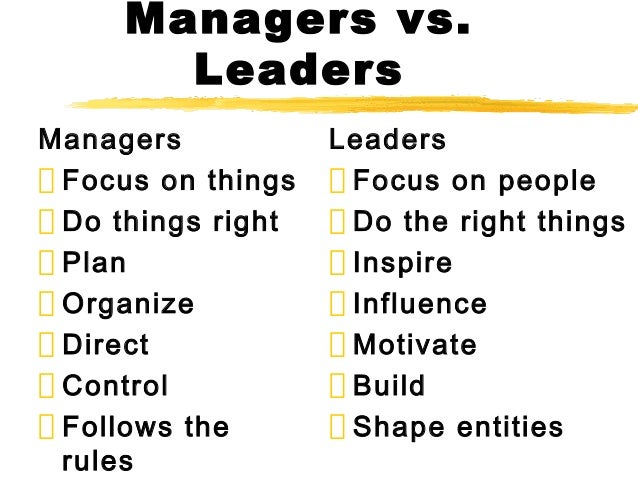
Sometimes, however, I learn just as much about leadership from people and stories that I might not want to emulate. For example, I was speaking with someone recently who works at a paper converting company. They explained that there is a supervisor who is, what I would describe as, the quintessential manager and seems to exhibit few leadership qualities.

There are two shifts at this particular plant. The first shift was performing very well. They consistently maintained producing at 115-120%. The second shift was performing significantly under 100%. In an effort to drive production in the second shift, the entire plant was brought in and sternly told they weren't working at their full capacity, and the expectation was 100% every week.

What happened? Second shift continues to be below 100%. First shift has dropped to 100%.

Image result for leader versus manager


So, the question is: how could the manager have handled the situation differently in order to keep the first shift working at above 100%, and also raise the performance of the second shift?

This scenario isn't much different than the one that I gave in a previous blog post about Teacher Evaluation Systems. Many times, initiatives seem to be implemented to bring up our teachers who need additional assistance to be successful, but in demanding additional compliance in order to help these teachers, we put a ceiling on our highest flyers. In the case of the paper converting company and education, I think that the people operating at a lower level would benefit from leadership that provides them with peer coaching, additional training, and is willing to have the difficult conversations with people who need them individually. For example, both the attitudes and the conversation would have looked much different if the manager would have said, "First shift has been doing a phenomenal job of producing at 120%. Clearly, they are doing something that is making them highly successful. We would like to see what that is, and would like to give everyone the opportunity to learn from one another. We are going to alter our schedules slightly for the next few weeks to allow for collaboration between first and second shift."

In the discussion with the employee, I also discovered that training time had been cut from a minimum of one month on a new machine down to two weeks or less but there was no adjustment to the expectation of efficiency. Often times in edu, initiatives are implemented with little training or professional development. We know this with students...practice makes perfect. As leaders, if we cut back on training and professional development, we need to reevaluate how effective we want teachers to be. If we want them to be highly effective (duh) then we need to allow them the opportunity to learn and grow and give them time to practice those skills.

We often talk about public education and the private sector as being two completely different entities, and I would agree that it is different when your "products" are children and their futures versus a ream of paper. However, I think that it is worth noticing that there are similarities as well. Leaders and managers possess similar characteristics wherever they are, whether they work in either sector. Their capabilities, strengths and weaknesses can be the catalyst for positive change or the push that plummets productivity.

Thursday, March 16, 2017

Teacher Evaluation Systems: Competition vs Collaboration

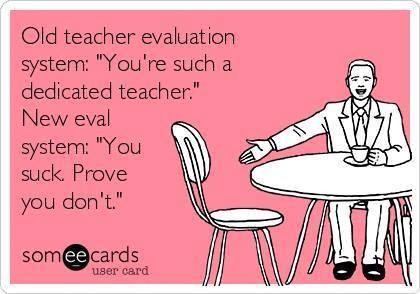
Every teacher evaluation system that I have been apart of has been implemented with the best of intentions. Administrators don't start their day trying to think of ways to make teacher's lives more difficult, yet the amount of compliance typically built into an evaluation system does just that. I was recently speaking with a teacher who informed me she has put 60 hours into one of the systems put in place to evaluate her teaching, and she was concerned that she hadn't done enough. To me, that's 60 hours she could have been spending on professional development that would ultimately have more of an effect on her teaching and students than what she spent that time on. Yesterday, I was looking for a quote and happened to come across this:


There are teacher evaluation systems in place that, frankly, send the message to teachers that we don't trust them. Often what happens in districts is that we implement initiatives to bring up our most struggling teachers instead of having the tough conversations and providing professional support and coaching they need, and in doing so, the compliance measures built into the evaluation systems ultimately bring down our highest flyers as we take their choices away. There needs to be systems in place to evaluate teacher effectiveness. No doubt. But evaluation systems based on compliance measures are like giving students points for putting their name on a paper (*gasp*). They leave very little for teachers to be proud of or learn from, and rarely do they truly show what a teacher is (or isn't) capable of. Generally, I've found that there is little to no buy-in in the process.

Another side-effect of compliance dominate evaluation systems is the amount of competition that eventually develops between teachers. One district I taught in had a system where teachers received merit pay based on their evaluation, but there was only so much money to be given. Teachers became competitive and collaboration opportunities were scarce. Awesome lessons were hoarded instead of shared, and the climate of the school became "every man/woman for themselves" Hunger Games mentality. Teachers wanted the additional pay, and nobody can blame them, but the evaluation system was backfiring because it was not supporting collaboration or learning for the sake of getting better for the students. 

Again, there needs to be evaluation systems, but the systems should be in place so that the work being accomplished holds some sort of value outside of additional pay or just keeping your place as a "teacher in good standing". For example, if teachers kept an online portfolio in the form of a blog, this would serve to increase reflection, the sharing of ideas, and collaboration outside the confines of the district. The work being done would be an authentic assessment of the teachers' ability, and would be shared with more than just the admin (exactly like we desire our students to have the opportunity to showcase their work for more than just their teacher). There wouldn't be a date in which administrators would see what has been going on all year because anyone at anytime could read about the awesome learning going on in a classroom at any given time. Reflections would be timely, personalized to what the teacher is currently improving on in their practice, and a logbook of accomplishments and growth over time. 

When people feel like something they are asked to do isn't of value to their performance, they may do it to comply with the order, but it will never become part of what they do to become a better professional. We need to provide teachers with opportunities to show how awesome they are in a way that will help them become better professionals, and begin to trust that they are doing their job.

Thursday, March 2, 2017

Stop Apologizing for Not Knowing

I have always been interested in tech, and I've always been willing to show what I know even before I was a technology integrator. Regardless of what position I've been in, there are always people that have apologized while I've been helping them. It's usually a "I'm sorry I'm not good at this" or "I'm sorry that I don't know more about this stuff" or "I'm sorry I'm so stupid with tech." My response has always been the same:

Please don't apologize. I know what I do because early on I learned not be afraid of pushing buttons. If you knew everything I did, I wouldn't have a job. My job is to help you learn.

While I understand that for some people (myself included) saying something like this actually translates into "Thank you for your help", I don't want people apologizing for a couple of reasons. First, to say your sorry means that you feel bad for something. In this case, probably believing that you're inconveniencing the person you're asking to assist you, but just because we're educators does not mean that we are not allowed to ask questions or request help. We are not required to be all knowing. It certainly doesn't mean that there should be feelings of guilt associated with being unsure about how to do something. Second, just by asking, you've already made my day. All I've ever wanted from the people that I've helped is the willingness to learn. Excitement for the learning is a total bonus.


I was working with one of my favorite teachers today, Lori Hron. She approached me to meet with her so she could become more innovative, not even recognizing the amount of innovation already in her classroom. She asked for a standing meeting on the calendar, so every other week around the same time we meet and discuss lessons and projects she has coming up, and we brainstorm ways to create something new out of what she has. My absolute favorite part is that she is so excited. You can see it on her face. It makes me feel the same way working with Lori as it did when I was a teacher and the students thought one of the assigned projects was awesome: total elation and a reminder of why I do my job. A couple of months ago she published her first tweet. A month ago she joined the Innovator's Mindset MOOC (#IMMOOC). Today, she published her first blog post. She has apologized to me for not knowing, and yet has been willing to learn and move forward despite her discomfort with what she didn't know, and I couldn't be more proud to work with her.

I've had people say to me that teachers should be able to learn about new initiatives on their own because they are professionals. I disagree. It doesn't seem like best practice to expect people to learn something new on their own without the district's vision on the initiative and significant professional development. Instead, I believe that because teachers are professionals, they should be willing to learn, and we should respect their time and efforts by providing them with the learning that they need to be successful. That respect for professional learning leads to questions without apology, and hopefully excitement in the possibilities of learning something new.

Wednesday, February 22, 2017

Be the Change

I had one of those days yesterday where you question how effective you truly are at your job. When you realize that thinking you're on the same page as somebody and actually being there are two different things. I tried to reflect on my leadership skills to see where it is that I'm lacking...places where I could make change in order to be the leader I need to in order to move people forward. I often see the same struggle in the people around me: the technology mentor teachers that I work with and how discouraged they are when people don't show up for their professional development, or a technology integrator friend of mine who's struggling with administration right now in trying to get them to see what's really best for teachers. It's sometimes easy to get stuck when you feel like you're pulling people along instead of supporting people in their own desire to move forward. I questioned whether I had what it takes to even live in this role, and if I was able to actually dig down and find the part that told me I could, where do I go from there?

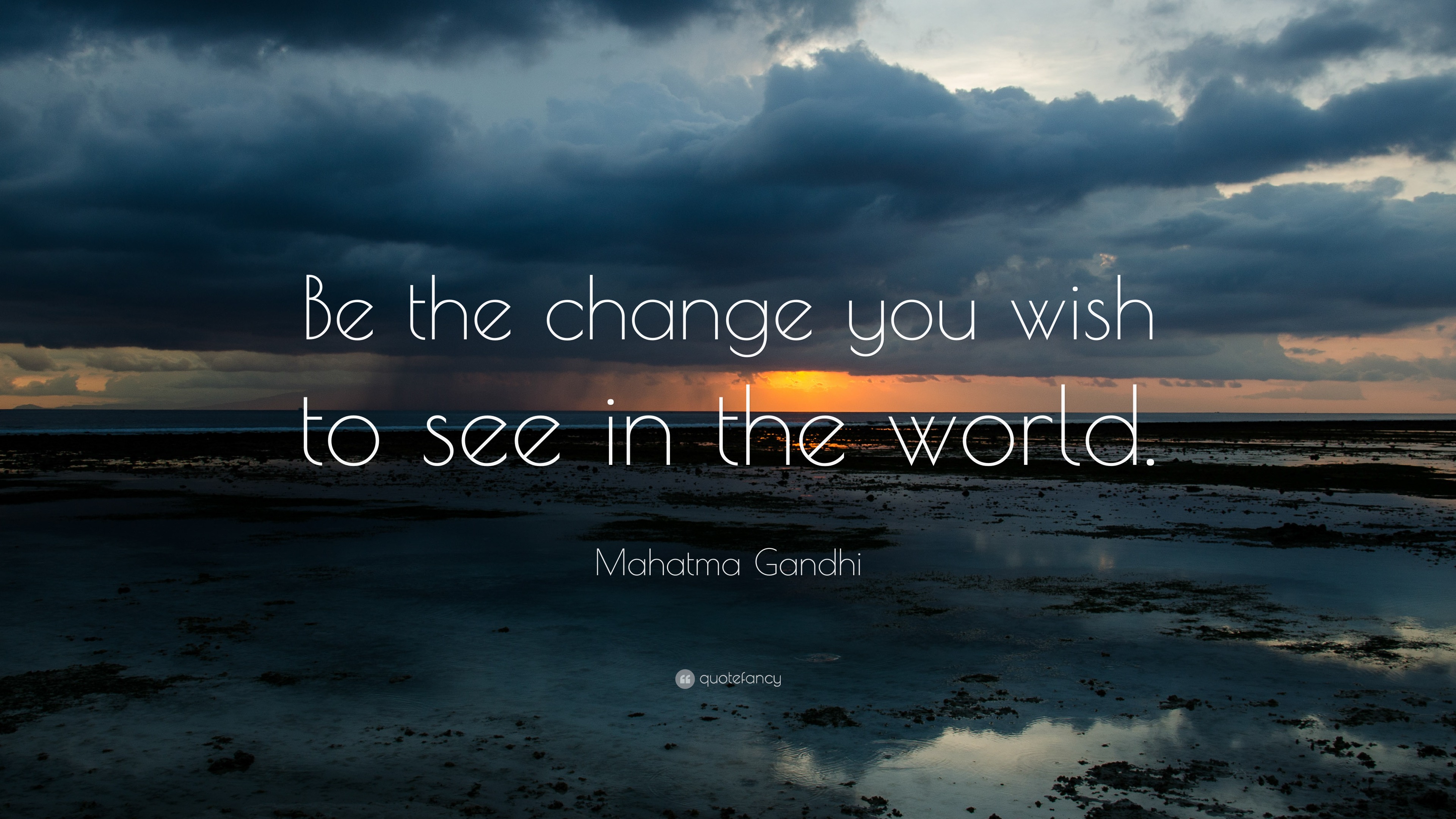
Recently, I've had several discussions about modeling the behavior we want to see. This needs to happen at all levels. If a teacher wants a student to be an effective listener, are they modeling that behavior when the students are talking to them, or are they distracted and thinking about 10 other things? If an administrator is asking a teacher to be a global collaborator, are they connecting with people on a global scale and modeling that behavior? We can't expect things out of people that we're not willing to do ourselves. After several lengthy discussions with a few members of my PLN, I came to the conclusion that I need to be the change that I want to see. If I want people be reflective and embrace growth, or if I expect people to be uncomfortable and learn, I better be willing to do those same things myself to show them that I'm walking the walk.

I can't preach change and stay stagnant myself and expect people to take me seriously.

Recently, my phenomenal mentor has challenged me to learn more about the back end of our technology department. My strength is instruction and teaching and curriculum and not networks and switches and routers. I balked when he first told me this. "I hate that stuff," I said.It made me uncomfortable because I didn't understand it. I honestly thought to myself how much of my brain power am I willing to allocate towards learning that. But, I set up some time with my network administrator and I'm slowly becoming familiar with that area. I don't particularly like it, and it makes me uncomfortable to be so unfamiliar with a large part of our department, but if I expect other people to grow and change, I need to have those same expectations for myself, especially when it's an area that I don't particularly like.

So, at a time when initiatives are plenty and I feel like there are many days where I'm not only not on the same page but possibly in a different book, I've decided to be the change that I want to see. I could give up and say that it's not possible to make change, but I'm going to choose the higher road and continue to model this attitude and behavior because in the end it's about the students and what's best for their learning, which alone is a good enough reason to make the effort.


Image result for be the change you wish to see

Tuesday, February 14, 2017

Supporting Instruction: How is Tech Integration Different?

I've often said that technology instructional support is different than any other content area support. I learned these lessons in my role as a technology integrator, and working closely with the wonderful math and literacy instructional support teachers. While I feel like all instructional support should work in tandem, sometimes, in order to move teachers forward, I needed to provide them with different types of support that may not have been necessary in the other areas. I narrowed them down to three main ways I provided support.

Tech Services: Can you fix this?
I was not tech services, but sometimes I needed to provide technical support when the technology was needed for the lesson immediately. Not only did it work toward cultivating relationships and building trust with the teachers I worked with, but as a professional, my job was not to dissuade the use of technology by leaving the teacher hanging if there was a quick fix in an emergency. Therefore, I did what I could if the situation warranted it. It was often the first contact with a teacher who would end up working with me later. While this was my least favorite role, I knew that some support of this kind was a necessary part of keeping a classroom comfortable with technology use, and in watching me problem solve, I was modeling some of the skills that I would like to see from teachers and students.

Training: Where do I click?
I've always said that the main difference between literacy/math support and technology support is that literacy support teachers, for example, don't need to teach teachers to read in order to teach them reading instructional strategies and best practices. However, in order for teachers to effectively integrate technology, they must have at least a baseline knowledge of what they're using. For example, in order to use Google Classroom with students, teachers really need to understand Drive. Training is the foundation for technology integration. Not only do you provide teachers with the skills they need to try new ideas in technology, but you also show them HOW to learn a technology. As technology continues to change and grow, we often say that we want students to learn how to learn as much as we want them to learn the content. This is what we are doing for teachers when teaching them the skills they need. We are providing them the content as well as the confidence to learn in the future when the technology changes.

Infusing Learning & Technology: How do I empower my students?
Even though it's difficult to get away from utilizing the term "technology integration", I feel like technology should be something that is so seamlessly infused in learning that it is difficult to separate the two. Integration sounds like it is something extra piled on top of the curriculum that is already there. This is often how technology is viewed, but my job was to support teachers in how they could look at their lessons from a new, more innovative angle, and how technology could empower their students to problem find/solve and show their learning. Ultimately, this is typically where the other content areas reside. They are supporting teachers in working with students and how to help them grow.

Oftentimes, the amount of professional development in the area of technology is significantly less than in other content areas because it's seen as an extra. When speaking with other technology integrators or coaches, their frustration is the lack of time given for professional development. I believe this is because when they do get time, it needs to be focused on training, so they never feel like they can move into the third category of learning.

However, if we truly believe that curriculum and technology should mesh seamlessly, it's reasonable to create learning opportunities for teachers where all of the instructional coaches are involved. If a presentation is being created on math strategies, for example, it could be done in Nearpod and modeled for teachers on how Nearpod could be used in the classroom. The teachers are then immersed in the technology that they could be using, and learning the math strategies at the same time, therefore fusing the two together. Not only does this benefit teachers by introducing them to ways technology can engage and empower, but there should also be a reasonable expectation that Math and Literacy instructional coaches have some tech knowledge, and that technology integrationists have general background knowledge in Math and Literacy strategies. Creating a team of instructional coaches to play off each other's strengths allows for professional development that is useful and relevant, and models the kind of collaboration that we want to see.


Tuesday, February 7, 2017

Busyness as a Badge

As I've often said in previous posts, I have been so fortunate in my career to work in multiple areas in education. I've been a teacher, instructional coach, district admin and I've taught at the post-secondary level. With each change in position, I have been able to look at situations in education through a different lens and I've been able to actually walk in the shoes of different positions and what the day entails to serve whichever stakeholders I serve to the best of my ability.

Personally, I've been a student, a college student, a college student with kids, a wife, a mother who worked part-time, a mother who worked full-time, a mom who worked full time and finished grad school, and a mother who worked several jobs at once. I've always thought, in every situation, that I was extremely busy. With all of these personal and professional experiences, I've noticed one commonality. People wear busyness as a badge of honor.

I've had several of these discussions around the idea of being busy, but most recently the #edtechafterdark guys posted about busyness as a badge, and that has really resonated with me lately. I made a conscious decision awhile ago to stop talking about how busy I was. Sometimes, I still fall into the old habit that when someone asks me what I've been up to, I'll answer that things have been crazy/busy/insane, but really, I've become better at realizing that being busy is relative.

I could give multiple examples both personally and professionally where people around me have declared a task can't be because they're busy. It usually starts with, "I can't" or "I could never" or "That would be impossible", yet there is another person, who may or may not have as much to do who will pick up the task and finish it with flare. When reflecting on this, I was reminded of this quote by George Couros:


Even though  George was referencing people moving forward and being innovative (or rather choosing not to), I think that the quote still applies to the badge of busyness. How many opportunities do people pass up because they feel they're too busy to take on something else? I am certainly not endorsing saying yes to everything that is presented, but I feel like busyness is a mindset. Since changing my mindset about what I have to do, I have been able to look at situations with a calmer attitude, and I've found ways to organize my thoughts and calendars to work with a better flow. My "crazy" schedule didn't change, just the way I thought about it did. Now, when someone else tells me how busy they are, I feel that I wish they would stop wearing the badge, change their mindset, and become less entwined with what they need to do minute to minute.

Along with busyness, I've noticed that at all levels, people question how truly busy other positions can possibly be. The fact of the matter is that everyone has plenty to do, it just may look different depending on what the work entails. For example, when I became a Technology Integrator, I would be sitting at my desk creating an instructional video for a teacher or researching new technologies, and inevitably a teacher would come up to my desk and say, "Since you're just sitting there...". It's so important to remember that in each of our positions, in order to support a positive culture, we understand that everyone is working toward supporting students and their learning. There is no us against them, no we are busier than they are, no this level/grade/school/group has more to do than the other. It's all in the mindset, and I think that it's imperative that we all embrace the opportunities presented to us instead of flashing our busyness badge. 

Monday, January 16, 2017

Sounds Good in Theory...

A friend of mine recently told me that a lot of what I say sounds good "in theory". When I was a classroom teacher, I often read the posts or Tweets of people who were no longer in the classroom and thought that what they were posting was great in this same way, but they had lost the practicality of their idea. Even some of the instructional coaches I felt had lost touch with what the real challenges are in a classroom. Since moving out of the role of classroom teacher, I have tried really hard to remember the million things a teacher has going on at an given moment, how inundated they are with new initiatives whenever I'm suggesting an idea or change, and that they are dealing with real students on a daily basis (versus the pretend class I talk to in my head).

Today, our professional development time was structured like an edCamp. I stopped into a session that was suggested to be a discussion regarding Flipped Lessons, but had morphed into a discussion around how to get students to watch the videos at night in order to be prepared the next day, which morphed into a discussion about student motivation...and it was fascinating. We know, in theory, how to motivate students. For example, the teachers discussed creating relevance between the content and students' lives, but then the Chemistry teacher questioned how he would take some of the more complex chemistry lessons and make them applicable to students. Not that he wasn't willing to learn, after all, that's why he was there. He just didn't know how to implement that practically into his teaching for every concept. We discussed how tired we are of compliance measures...how the teachers want the students to watch the videos because they want to be engaged learners and not just because they are getting a grade, but are constantly demoralized when students just want to know what they "need to do" to earn an A. The general question was: How do we get kids to care about everything they learn ALL the time? How do we, as teachers, make everything we teach relevant to students? Again, we know what sounds good in theory...how do we implement it?

I thought about the fact that I need to do something called a PDP in order to renew my license. Basically, the state collects a bunch of artifacts that we submit to see if we have met a goal that proves we are good teachers. In general, these are seen as something to check off a list. There is no buy-in whatsoever to the process. I related this to a subject that a student has no interest in, and thought to myself, "What would I need in order to be engaged in the PDP process?" I decided I would be engaged if I could create my own goal and work toward something meaningful. Well, guess what? The PDP process allows for that, which means that my attitude toward the PDP is really about my mindset. If that's the case, are students' learning and motivation about their mindset as well? I believe that's something that can be changed, so how do we go about changing that, and not just in theory?

The only reason I was slightly disappointed in the conversation was that we didn't have enough time to finish it. I wish I would have had answers for these teachers and I just didn't. We clearly need to change our practices, but need practical answers on how to implement the ideas. How do we go about creating change to incorporate everything that sounds good in theory?


Thursday, January 5, 2017

The Kids Get It

I had just gotten home and was sitting eating dinner when my kids started complaining about their homework. My kids hate school. Every single one of them even though they excel, have high GPAs, and are well liked by their peers. When I ask them why they don't like school, their answers range from "it's too easy" to "I don't see how most of it relates to my real life".

Hmmmm. Sounds like a blog post.

Tonight, however, the object of their distain was specifically their assigned homework, which they know that I am anti-compliance-based-homework as it is. Although I have four kids, the two most vocal are my daughter, eighth grade, and my younger son, a sophomore. The conversation went something like this:

Daughter (in her best rage filled voice): "I have MORE problems to do in math. Just because I'm advanced, doesn't mean that more of the same problems are going to affect my learning".

(spoken like a true educator's child)

Son: Well, my homework is about finding an imaginary number. That's right. A number that actually doesn't exist. A fake number. I am spending time finding a number that is imaginary. Mom, when have you ever needed to find an imaginary number?

(insert blank stare here)

Daughter: Or how about finding a set of numbers on a coordinate plane. How about that, mom? When's the last time you did that?

(well, when I taught it in fifth grade, but insert another blank stare with a smirk)

My kids don't see the connection from what they are learning to their real lives, therefore, they have no buy-in as to what they are learning. They will do it because they have learned how to be students, play school, and get good grades so they can "learn what matters" (in their words) in college. They look at their K-12 career as hoops to get through to learn something that means anything to them. My fear is that they have learned so well to play the game by fulfilling the compliance measures set that they are not even sure about the why behind anything that they learn anymore. It's so important for us, as educators, to make sure we are creating learning opportunities where students can see the connection to content and their lives and to know that there is a purpose behind the experiences.

Image result for school connections real life quote

Sunday, January 1, 2017

#oneword for 2017: Relentless


I work on a school calendar. My year goes from September to June (I think July and August are in there somewhere), therefore when I create goals for myself they are initialized in early September. I don't make New Year's Resolutions. We are halfway through my year by then.

I do, however, love the #oneword trend, and after watching my PLN follow through on some of their one words from last year, I have decided to choose my own. My #oneword2017 is:

Relentless


In the past, this word irritated me. It is the number one word that people have used to describe my personality (or some version of it: tenacious, persistent...) and I always felt it carried a negative connotation. I'd connect it to other things people have said to me: "Why are you constantly thinking about that?" or "Why are you so obsessed with (insert anything here)?" or "Just give it up already!" because I didn't know how to give up. Then I realized...I didn't know how to give up! I could look at being relentless as negative, or I could turn it into a positive personality trait that would guide me in times where giving up is the easy thing to do. Times when other people might give up. Luckily for me, I don't do easy. Why? Because I'm relentless.

Jennifer Hogan (a seriously intelligent and kind woman whom I hope to be like one day) posted this quote on Twitter to support her new three word blog post (that you can find here), and I felt it was fitting for the pivot I needed to do in order to rework the definition to be a positive trait:


It's all about changing my mindset.

My one word this year will guide me in my new career...relentless in creating a new culture within my department which will be more effective in giving teachers and students the tools they need to learn and be innovative thinkers and problem finders. Relentlessness will allow me to come back from failure stronger and smarter than I was prior, and be proud of any gains that I make in the process versus disgusted at not being successful the first time. Hopefully, if I model this trait, others will see the value in it, too.

I will be relentless in my personal life...balancing all of the facets of my family, career, new endeavors, relationships while continuing to try my best to be kind, empathetic, caring and giving. When I'm down and feeling like I'm not good enough for what I am trying to accomplish, relentlessness will move me past that to see what I can do to be better.

I choose to view being relentless as having courage to go on when others won't, to continue to try to create real change even when it is difficult, and to continue to love, encourage and support others when they don't see the value in moving forward.
Image result for sayings with relentless

Tuesday, November 29, 2016

Defining Educationese & Creating a Common Language

Education has so many buzzwords at any given time. We take these words, throw them into goals that we create, revamp our mission & vision statements to include them, and expect teachers and students to meet the goals. What we often don't do is define what the words mean to the district. How the district defines any particular word that is used as a driver for learning. The term innovation is a perfect example...personalized learning is another. If we don't take time to define the educationese that we use in our goals, it's difficult to expect people to know how to meet them.

Recently, I was presenting a workshop on personalized learning. The night before, I had an idea on how I might be able to get this very idea across. I revamped my presentation, and the next day I broke the participants into groups, gave them a word that I wanted them to define and asked teachers to close their devices briefly (gasp! - I know, it was only for a bit, though) so they couldn't look up the definition. The word was Nomophobia. Teachers were asked to define the word, create a SMART goal to meet the needs for this word, and action steps on how to meet the SMART goal. The result was amazing. Teachers created very real goals and definitions. They had an idea of what the word could be by noticing that the root word "phobia" was there, similar to how we might have an idea of what a buzzword might mean. They created action steps that would be best practice for meeting any goal. They had professional development offered, students were creating content, teachers were running PLCs based on the concept. They had many activities that we see in new districtwide and schoolwide implementations every day. When all the groups finished, we looked at how they had defined the unknown word. Even though they had fantastically realistic goals and activities, all of their definitions, although similar, were incorrect. All of them had an element of truth. The groups recognized that phobia was a fear, but the root word threw them off, therefore while the plans were solid, nobody knew what the goals and activities were really accomplishing.

(Nomophobia, by the way, is the fear of being without a mobile phone. I am a self diagnosed Nomophobiac.)

Sometimes, defining a word seems like an elementary task. Sometimes, it seems like it would be obvious that all stakeholders know what a term means. Sometimes, I think deep down, we are afraid of finding out that we were the ones who didn't know what it meant. No matter the reason why, when we create goals and implement new ideas without going through this important step, we are risking complete failure because we have no common foundation to build upon.

Sunday, November 20, 2016

Would you do what you're asking of your students?

I think that we oftentimes have expectations of students that we, as adults, would not do ourselves. Many times, we file this under the fact that students are children and we are adults, so as adults we should get special privileges that students shouldn't have. However, not all of what we do should fall under this umbrella, and we need to be more cognizant of what we are actually asking of our students.

How We Listen
Since I have moved into instructional support (even as a director I'm still instructional support), I have been able to work with adults in a different capacity. As I provide professional development or hold a meeting, I can see things I couldn't when I was sitting as a participant. Oftentimes, I see participants multitasking, chatting on the side, or standing up because they "can't sit that long" (and I do all of these same things...sitting quietly through a long meeting is the closest thing I know to torture). Yet, students are often asked to sit for extended periods of time while doing nothing but listen. In education, we are just now seeing classrooms moving to flexible learning spaces, but not all classrooms have embraced this kind of learning support yet. If an administrator would ask adults in a meeting to close their technology, stop grading papers, and sit down quietly, many of us would be outraged.


Conflict Resolution
Another example is what we ask of students when they have a disagreement. Students come in from recess angry after arguing with each other, and we ask them to go get some version of a conflict resolution bridge, and tell them to go in the hall and work through it. Teaching kids conflict resolution is not the issue. Obviously this needs to be done. However, as adults we often take time to process a disagreement after having it. If we don't, we are often told we should have because people need time and space to think about what happened and what the best solution would be. Think of how it would feel if you were involved in a disagreement with a co-worker and the principal took you two immediately into the office and told you to work it out? It would be uncomfortable and possibly confrontational. Yet, we tell students to handle the situation immediately, which leaves them frustrated, angry and less likely to be able to process the situation they way they could have otherwise.

Uniform Expectations
As we go through our year as educators, we need to have expectations uniform from our leadership or we struggle trying to figure out what is expected from us, which makes sense. It's difficult to work in conditions where you're unsure of what's expected. Sometimes, we have a few leaders who have expectations that differ, and are either left frustrated trying to figure out what we need to do or stressed knowing that no matter what we do, it won't satisfy everyone's expectations (or both). Yet students go through their day interacting with several different teachers all with different expectations. For example, particularly at the secondary level, a student might have one teacher might consider "on time" as being in the seat with books out, another teacher may consider just being in the room as on time, and yet another considers on time as being as long as you can be seen outside the door and walk in prior to the sound of the bell ending. Those teachers might be the first three classes of a student's day, and they might still have four more. The expectation of what is considered tardy is only one small compliance in the grand scheme of rules and procedures that teachers might have implemented. We expect students to conform and adjust to us, but what is expected of students is sometimes not what we would accept as being reasonable as adults if the same were done to us.

Empathy needs to surround us as teachers, and I think many teachers are amazing at thinking about their students' learning challenges and life outside school, but when it comes to what is expected of students across their whole day, we may need some reflection time. If it is something that we wouldn't do ourselves as adults, maybe there is a better way in order to make it work for students.


Thursday, November 17, 2016

Five Things to Think About When Talking To Students

Teachers are busy. No doubt. There are a million things going on around them at any given time. While trying to live in the moment, they are reflecting on what just happened and thinking about what needs to come next. Being a teacher brings the role of "multitasker" to a whole new level. However, while our jobs may include standards and best practices and getting that next math lesson ready, our entire reason for professional being is for our students, and being aware of our interaction with them is one of our most important duties. Here are five things I think we need to remember when talking to students:

Be Present

Oftentimes, we have an undercurrent of a to-do list running through our head at all times which keeps us from actually living in the moment that we're in. With such busy minds, it can be difficult to remove the thinking that distracts us from what is happening right in front of us.  Sometimes, I am thinking about an answer prior to the person even finishing, which diverts me from catching additional information they might be giving me in the conversation. Also, kids have super skills in detecting if someone is paying attention. It's imperative that we turn our attention to whoever needs us, quiet our minds in order to be in the moment with that person and give them our full attention.

Be Empathetic

Image result for difficult kids need us mostEmpathy can be a hard emotion to conjure when you're constantly on the move or trying to determine if a recess disagreement was bullying or tattling. But, so many of our kids are coming to us from situations that are not anything we've been unfortunate enough to experience. Recently, I was speaking with a consultant who worked in an area that the gang activity was really high. When working with a principal in a school from the area, they determined that the high rate of teen pregnancy was because the gang members were impregnating girls in order to raise the next generation of gang members. Think about the level of mental and physical strain that those kids were going through, yet they were still coming to school. Some of the kids have situations at home that we, as adults, we would be crawling under the covers and refusing to come out, yet they come to school and are expected to learn and act in a socially responsible manner. Sometimes, the most difficult kids are the ones that need our love and understanding the most.

Remember They're Kids

When my son was in first grade, he really liked his teacher. One night, he came home and told me that she liked a certain animal, and he was going to draw her a picture. He worked on it for hours, which is impressive for a child who was that young and didn't like to draw. When he was done, he was proud of his creation and asked me for an envelope that he could decorate to give it to her as a present. I gave him one, he spent more time decorating the envelope, and put it in his backpack for the next day.

After school, I asked him if he gave his teacher the present. He said yes, but didn't look as excited as I was expecting, so I followed up with, "How did she like it?" He told me that he tried to give it to her, but she was busy and told him to put it on her desk, and then never said anything to him about it so he didn't know if she opened it or not. He was crushed. He never drew another teacher a picture again.

It doesn't really matter if you're talking about a 5 year old or 17 year old, they are just kids. They are trying to figure out who they are, which let's face it, is something that even as adults we can't seem to get a handle on. Everything that happens to them will shape what they think and what they do in the future. That one interaction, where the teacher wasn't present, wasn't remembering that she was dealing with a child, affected my son. She probably doesn't even know she did it, but her attitude toward him had lasting effects. They're kids. They're not adults. They need patience and attention and to feel like you know they're there.


Model Good Communication Skills

I don't think that adults, including myself, really grasp how kids grab onto our words and actions. Even when it doesn't look like they're watching, they are still paying attention to everything we do. An old song that reminds me of this is by Harry Chaplin called Cats in the Cradle. Basically, the song is about a dad who doesn't have time for his son, and in the end the son doesn't have time for him. While this may be a little dramatic, I guarantee that when students watch us communicate and interact with others, they are taking in how that sounds and what that looks like and recreating it in their own interactions.

Take a moment and think about the communications you had during the day today. Were you present? Were you being an active listener? Did you smile? Nod? Look angry? Bored? I once talked to an assistant superintendent who I swear was thinking about what he was going to have for lunch throughout our entire conversation. Would you want your students communicating in the same fashion you do? Are you modeling the kind of communication you want your students to use?


They Want a Relationship With Us
When little ones seek attention, it's because they want adults to realize they're there. They want to have a relationship with us where we think that they're awesome. And they are, all in their own ways. Even as the students get older, they want that connection with their teachers. Even if they would never admit it in public, they enjoy having a friendly conversation with a teacher who has taken an interest in their interests, and who can connect with them on another level besides academic. When students talk to us, it is the perfect time to cultivate those relationships and make the connections. Your favorite teacher in school wasn't your favorite because they were super organized or taught the standard for equivalent fractions...it was the teacher who made the biggest impact by being present, listening, and making a connection. For some kids, these relationships might be the only ones they have, and that connection might mean the world to them.

Saturday, November 12, 2016

Made in China: New Connections

I've joked before in posts about living my entire life outside my comfort zone, but it's true. It's where I've found the most rewarding, unexpected experiences to happen that, in some cases, have changed a part of my person that would not have otherwise been affected. A few years ago, I decided to begin to say yes even when I really wanted to say no. Sometimes, that means considerable angst and anxiety, and my poor friends and family take the brunt of it as I try to work through what seems to be a complete inability to take things as they come.

When I was asked to go to China for an international forum and to visit schools in order to see if there could be the possibility of student exchanges, I was more than apprehensive. China was never a country I considered visiting, and I was concerned about some of the stories I had heard about others' experiences. However, in the true spirit of trying to say yes instead of no, I agreed to go and, in turn, began my months worth of worrying and concern about what everything would be like, and if I would do something wrong no matter how hard I tried to control my Americanism and end up tragically offending someone. My good friend, Dave Gundlach, was convinced I would cause an international incident. Possibly end up in prison. I didn't really think he was that far off.

The plan was to travel with our high school principal, Randy Hatlen, and his wife Mary. But while they had each other, I would be going alone. Alone. Another thing I don't do well at. I was concerned about this constantly. I have traveled alone many times before, so that wasn't the issue. The issue was the part of being alone in a foreign country in which I would stick out like a sore thumb. We didn't have a clear itinerary. I didn't know what to pack. I didn't know what the hotel would be like. I didn't know if my curling iron would work (gasp!). All in all, this trip would be the opposite of everything that I need in my life to feel comfortable. Lists. Plans. Checkboxes. And we were missing all of them. Then, to top it off, the first change came instantly when we arrived in China. First thing, I was separated from Randy and Mary to go to a different hotel because our itineraries changed, and I was to go alone. Alone. By myself. In China. I cried for an hour when I got to the hotel. I'm not proud of that, but I was literally past my anxiety point and had no idea what to expect next. I was trying to tell myself that I had an opportunity that I might never have again. It didn't matter. I was distraught. It was pathetic.

The next day I was exhausted. I had five hours of sleep in 48 hours and I was almost sick I was so tired. However, my first school tour changed the entire game. Changed my entire view, really. Being able to interact with kids and see them learn, even when the teaching was so different and the style was like nothing I had seen, reminded me exactly why I do what I do when I work late hours and go away from my family to conferences and workshops. The students were thrilled to see us. Literally thrilled. They would squeal if we said hello. Blush if we asked for a picture with them or gave them a compliment. One boy, red-faced, head hung and embarrassed, came up to me to give me a paper flower he had made me. He was about 12 years old. It was the highlight and turning point of my trip. Kids are kids no matter where you go. They want to learn and grow and deserve that chance. Leave it to the kids to set me straight.

From that moment on, I vowed to try to take things as they came, and that was a good choice for me because had I been looking for the most random experience ever, I would have certainly gotten what I wished for in China. Ultimately, living outside my comfort zone allowed me to have an amazing, life-changing experience. Not only did I cultivate a love for the country and its inhabitants, but I met phenomenal people from all over the world. People that create positive change for education and are truly making a difference in their educational system. I was humbled to be able to be a part of their experience. For example, my new friend Sylvia Paddock, who works with schools to improve teacher effectiveness through professional development and shared professional practice, and who shares my weird sense of humor. Or the amazing Joel Backwell from Australia, who passionately believes that creating relationships with Asian countries will allow students to have opportunities in the future that they wouldn't have otherwise, and who has quickly become a good friend of mine because he makes me smile just by chatting with him. My new friends Dan Meyers and Scott McLarty who are headmasters of a Catholic private school in San Francisco and are not only ridiculously intelligent, but also the ones who can make me laugh until I cry repeatedly with their quick wit. And finally, Petri Vuorinen from Finland and Rients VanGoudoever, who I was able to have engaging, informative conversations with about the state of education in our respective countries. Also, they might be two of the sweetest people I know. These connections have already enriched my life both personally and professionally in very unexpected ways, and I haven't even landed back on US soil yet. At one point, we were engaged with people from around the world that represented seven different countries, and an outsider might have thought that we had been friends all our lives. I don't know about anyone else, but I could use more togetherness right now...less us against them. Hopefully, we were modeling the kind of connections we would like our kids to make; the kind of future collaborations and relationships that they need to have.

I'm more sure than ever that the choice to say yes when my whole being is shouting no is one of my better life choices. It's not easy. It's difficult to consistently choose to go against your gut, especially when everyone tells you to follow it. However, had I said no to this China trip, I would have been passing up an opportunity and friendships that I now wouldn't give up for anything.


Sunday, October 30, 2016

I'm Not a Natural

A few weeks ago, my friend George Couros wrote a blog post called No Shortage of Road and reading it made me smile because I could really relate to it. Basically, the post is about how he used to be able to run marathons and loved running, and now he doesn't and it's painful, and how sometimes it's hard to see what's behind you because you're so busy looking at the people passing you. So true, and it's inspired me to write my own blog post.

There are quite a few things that I am not a natural at. Things I have tried and they just do not come easy to me: public speaking, chemistry, and running (among others). I like to believe that I have a pretty healthy growth mindset, so it doesn't mean that I can't do these things, it just means that I need to work much harder in order to do them well. Public speaking is a prime example. As a kid, I didn't even talk to people let alone talk in front of people, so when I went to college I took every public speaking course I could find in order to conquer that fear. Now, I can speak in public and am often in front of people, so I joke and say that I live my entire life outside my comfort zone. I am not a natural public speaker, but I can speak publicly.

Running is another one of those things that I am not a natural at and I want so badly to be. Not too long ago I was in a #personalizedPD chat with my friend Jay Posick and he joked about getting back from something like a 12 mile run just for fun. JUST. FOR. FUN. And I instantly thought to myself, I could never do that and was disappointed in my meager three miles that I run (even my growth mindset needs a check sometimes).

I am not a natural runner. I say that because I need to work hard at it. I've been running for two years and there are times when I can't even run the three miles and need to walk some of it. I have asthma and sometimes that acts up, or I get those ridiculously painful cramps in my side (does anyone know how to stop that?!?). But, in looking back, I have come a long way from when I began. At first, I wouldn't even run outside because I knew I wasn't fast and I knew my running form was less than stellar. One of my favorite Friends episodes is where Phoebe tells Rachel to go outside and run even though she looks strange doing it. She says, "It doesn't matter if people are staring at you because it's just for a second and then you're gone!"


When I look back at where I started to how far I've come, I'm proud of the work I've done even though I might not be as good of a runner as others who have been running for the same amount of time. There have been times where it has been literally painful (today was one of those days), but the progress I've made has been from hard work, ignoring any feelings that people might be staring, and knowing that running is good for me mentally and physically. I'm more proud of the progress I've made in this area than I am in other activities that have come easy to me. I have failed a million times at running my entire three miles, but the times that I have run the three miles are enough of a success to keep me motivated to continue to work hard and get better.

It's important that we teach learners (adults and children) that it's not about comparing yourself to someone else, but it's about recognizing our strengths and weaknesses and and the work you do to grow in these areas. And it's not about the growth you do in relation to someone else's standard, but the progress you make according to your own standard. We can choose to use our weaknesses as excuses for why we will never be any better, or we can use them as motivation for growth and change. Just because something might not come naturally to us, doesn't mean we can't create our own type of success, and what might be considered successful to one might not be for another, but we should be celebrating those successes anyway. 

Image result for growth mindset

Friday, October 28, 2016

We Underestimate our Students

I always felt like one of my strengths as a teacher was that I always had high expectations for my students. I never lowered expectations based on a specific class or student. I expected them to grow and make progress (at their level), to enjoy learning (most of the time-we all have our days), and that each of them had strengths that made our class the community it was. Students would rise to the expectations. There was never a reason to lower them. I tried hard not to underestimate what my students could accomplish.

Yesterday, I was shopping with my daughter and I ran into one of my former pre-service teacher students from the university. She's a super girl, appropriately candid and always asked great questions. She will be a fantastic teacher. She was in one of my first classes I taught, and we all know as teachers how first classes have the ability to create a special imprint. When I asked her how her semester was going, she replied with "It's a joke". Immediately, I jumped to the conclusion that it was a lot of work, that she was swamped and struggling to keep up, therefore: a joke. When I asked her some clarifying questions, I found that by "joke" she meant that her classes were too easy. She said she was able to get all her work done at her job, hence the reason she was out shopping instead of studying like a college student should. She said that she thought her classes would be more rigorous. Instead, she barely has any work to do at all.

I'm not going to lie, I was a little shocked, but my pre-service students always continue to amaze me. It's one of the reasons that I love teaching those classes. Then I realized that I had totally underestimated her because she is a "college student" and I had fixed her with a get-out-of-as-much-work-as-possible stamp, which was wrong of me to do. In this case, she WANTS to learn. She WANTS to be a great teacher. Her classes are not providing her with enough to keep her learning, and it's irritating to her. IRRITATING TO HER that she can't get the learning she needs to be awesome (which she will be anyway because she will make it happen on her own - she'll be awesome in spite of school).

I feel like we find that same thing with teachers in the field. They have a window where they are excited and want to do what's best for their students but are not provided with the training and tools they need to move forward, so some burn out and some become cranky, but they don't start out that way.

As for the high expectations for students part, it was a good gut check for me. I was discussing this with a teacher at the beginning of school. He's a great guy, came into the teaching field from the private sector and is doing his absolute best while not yet having his teaching degree (he's working on that). When I asked him how it was going (he was first-year teacher exhausted, we can all relate) he said, "I don't know. I think I just need to lower my expectations for how my students should act". I told him absolutely not, if anything, raise them. Have faith that your students will rise to the occasion and will probably surprise you by bypassing your expectations and coming in with ideas and behaviors that are better than expected. Yet, I did the same thing with one of my students, underestimated her because she is a college student.


Image result for high expectations for students

Sunday, September 18, 2016

Change is an Opportunity to Do Something Amazing...All Around #IMMOOC

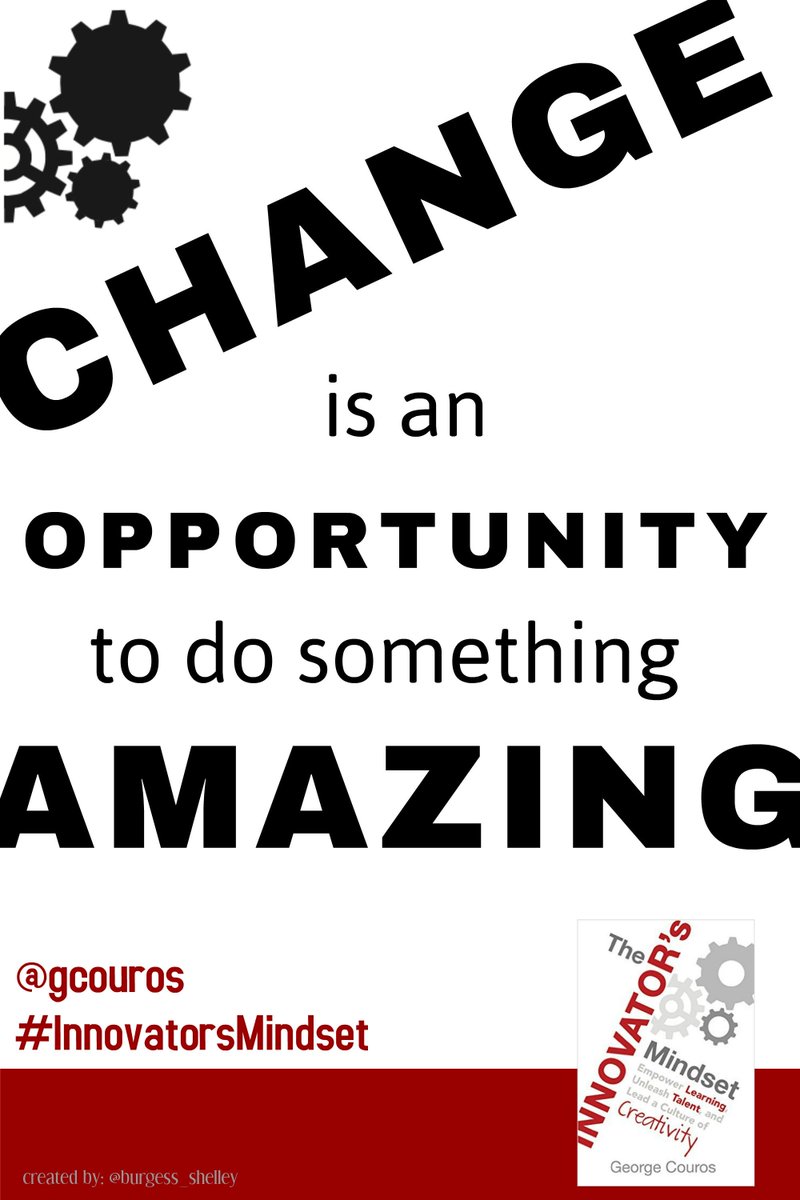
I have taught and read the Innovator's Mindset several times. I read it the first time for me, the second time for a book study for my school district's Innovation Teams, a third time through the lens of a pre-service teacher when I assigned it to my University of WI - Oshkosh students, and now again for the #IMMOOC book study. I have reflected on it repeatedly, blogged about it quite a few times, and have had/participated in multiple book studies on it, recommended it to hundreds of people. In all these discussions, the quote that seems to resonate with the most people is always:

Image result for change is an opportunity to do something amazing

It's easy to apply this quote to education. Our world in EDU is constantly changing. New roles are created, new curriculum is adopted, new technologies are being introduced all the time. Our world is practically fluid, rarely do things stay the same. For some, these changes in education are expected and while not always embraced, they are at least accepted. For others, change is a difficult and stressful time. The quote resonates with people because it takes the constantly fluidity of education and puts a positive spin on it. We are perpetually changing, and with that change, you can either fight it or take it as an opportunity and run with it. In that case, it's hard to imagine anyone not choosing to be amazing.

As another semester of my UWO students started and we were discussing the beginning of the book, and one student said, "I like this quote because I think it doesn't only apply to education and our jobs, but applies to our whole lives. We are in college. We've experienced big changes in our lives when we came here, and we can choose to do something amazing with our experience." I have been reflecting on what she said since that class, and it's true. Students in college are expected to make big decisions that will affect their lives forever. I remember George telling a story in one of his keynotes about a student who said she was expected to go out and change the world when she left for college, but shortly before that she had to raise her hand to go to the bathroom when she was in high school. It's a big change when you go from the constraints of high school to the openness of college, and the change is definitely a choice and an opportunity to do something amazing.

I've experienced this myself recently with taking my new position as Director of Innovation & Technology. And as much as I love my new position, there have absolutely been moments when I've felt like the amazing part of the change might not come, or "Who am I to think that I can do something amazing at all?". Change in any form is hard, and to convince yourself to do something amazing with that change can be even harder. I think about friends who are going through tough times personally: job changes, divorce, financial trouble, and it's possible that this quote might be able to be applied to all of that. In any of these cases, including in the classroom, the work related changes, the college student, the job change, the personal issues...the amazing part of the change is going to take some work.  It's probably not going to be a lightbulb moment or some epiphany where you think, "Ahhhh...there's the amazing!" but rather something that takes diligence and commitment, hard work and motivation, which can be the hardest to muster during difficult times. I think that remembering great quotes like these help us work through those changes in order to find the amazing, which brings me back to another one of my favorite quotes, and I think these two go hand-in-hand:
Image result for not telling you easy worth it